Clarify the Problem
Problem and goal statement
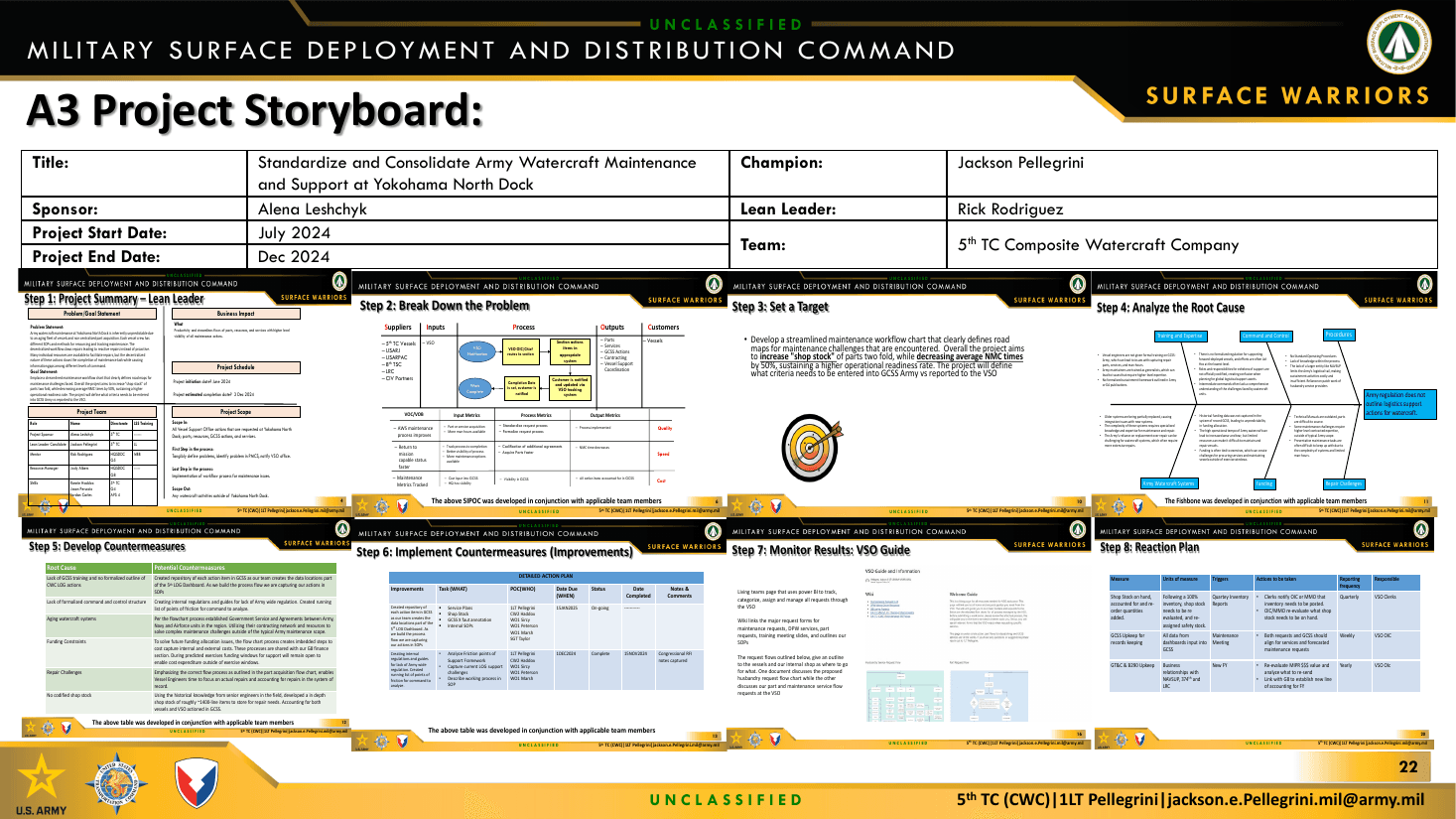
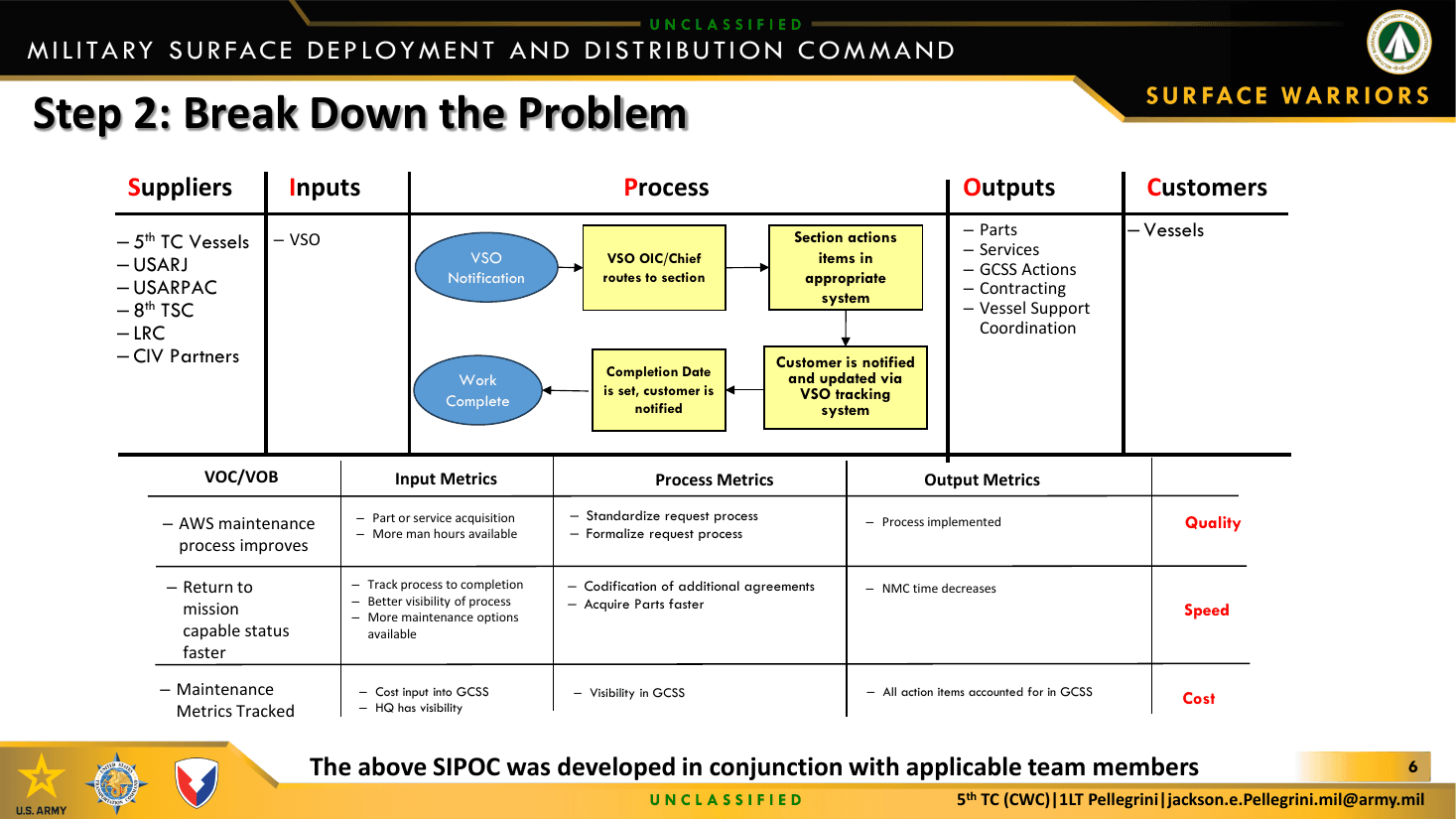
Maintenance was unpredictable because of an aging fleet, non-centralized part acquisition, and different crew procedures for resourcing and tracking work. The goal was to establish a streamlined maintenance workflow, increase shop stock two-fold, reduce average non-mission-capable time by 50%, and define what belonged in GCSS-Army versus the Vessel Support Office.
Break Down the Problem
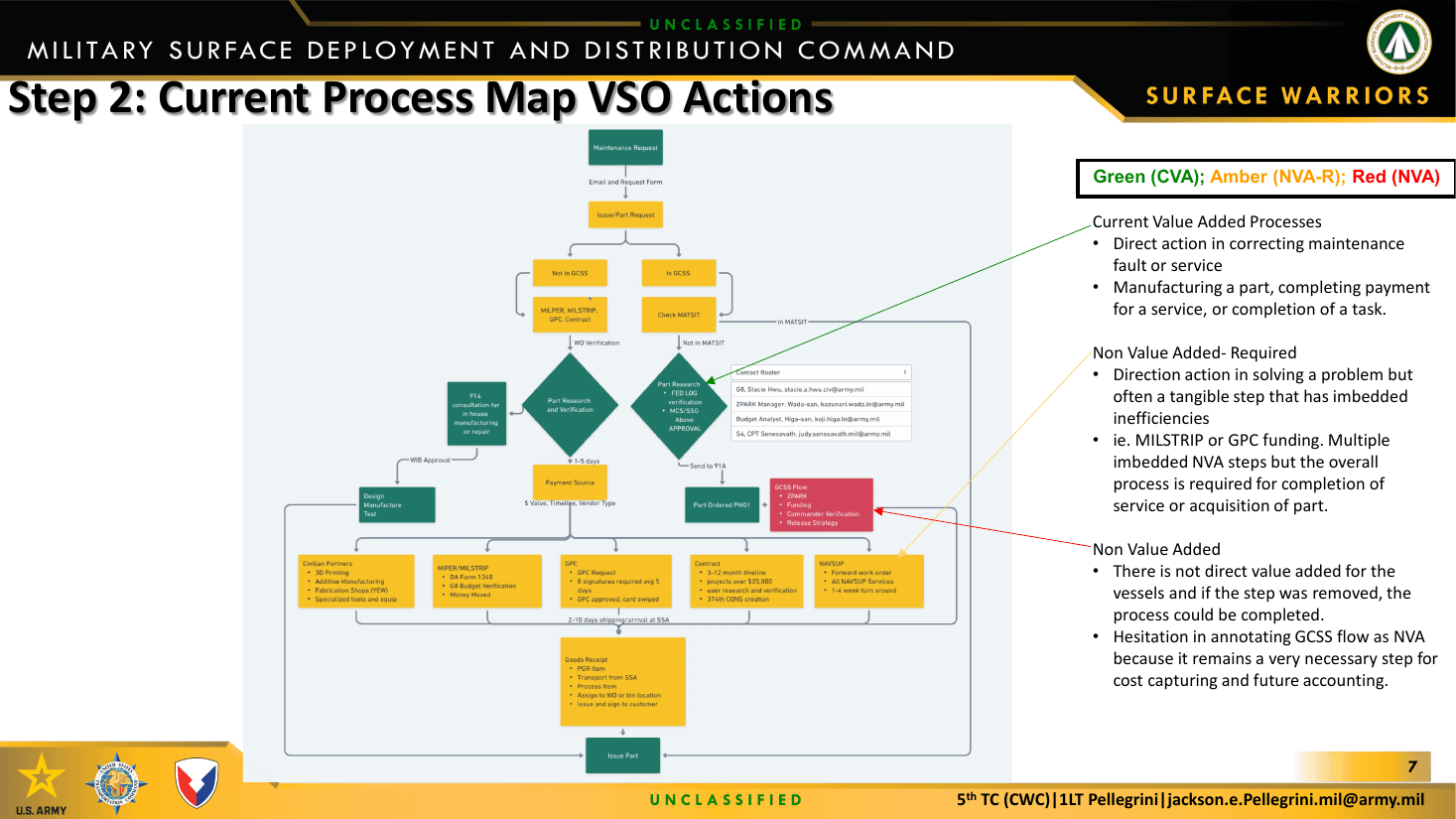
Current Process Map: VSO Actions
A map of the maintenance request process from vessel notification through VSO routing, section action, completion, and customer notification. Identifying current value-added, non-value-added required, and non-value-added steps.
Set a Target
Increase shop stock and decrease NMC time
Develop a streamlined maintenance workflow chart that clearly defines the road maps for maintenance challenges. Increase shop stock two-fold while decreasing average non-mission-capable time by 50% and sustaining a higher operational readiness rate.
Analyze the Root Cause
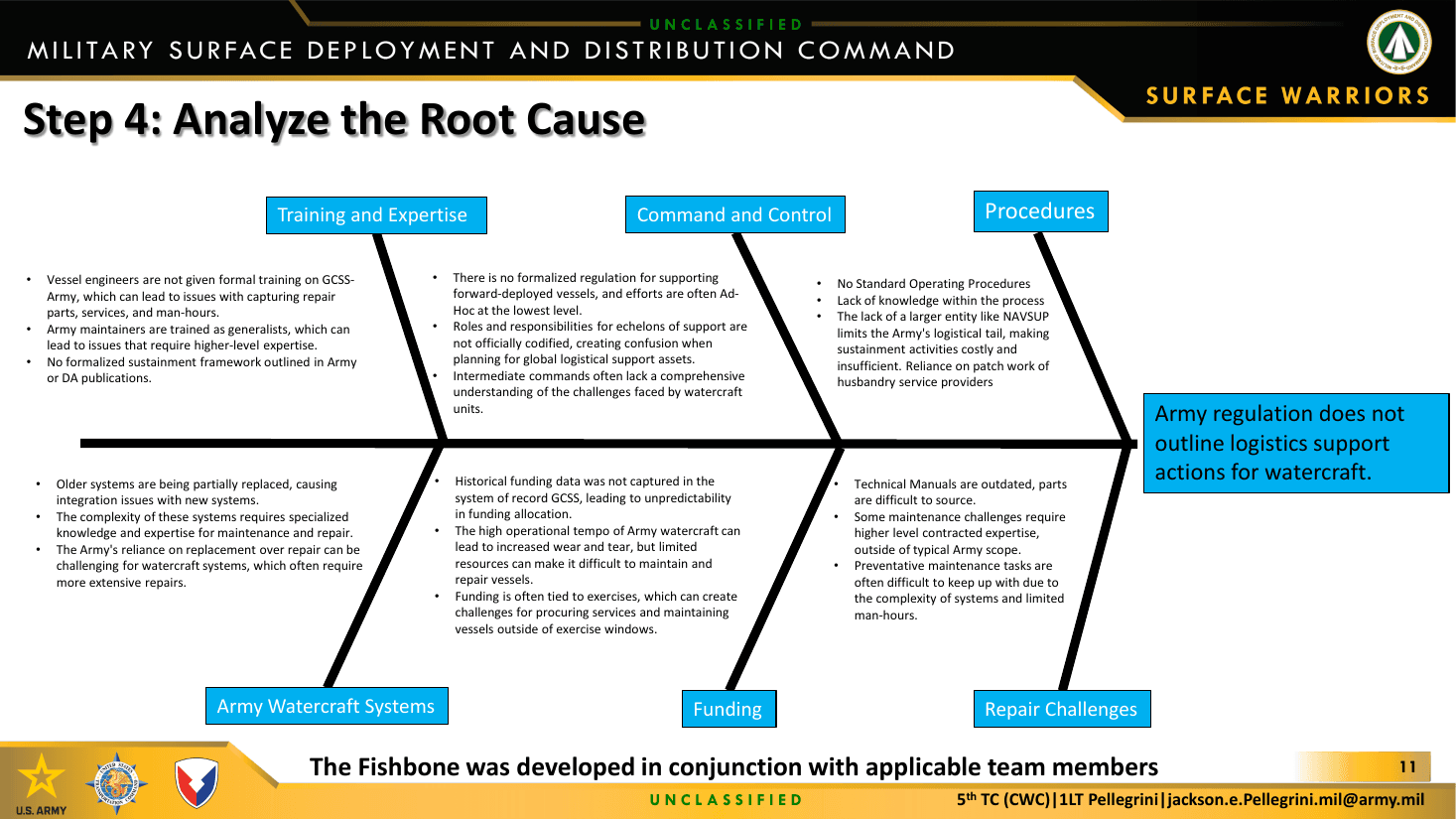
Army regulation does not outline logistics support actions for watercraft.
This fishbone analysis covered training and expertise, command and control, procedures, Army watercraft systems, funding, and repair challenges.
Step 5 / Develop Countermeasures
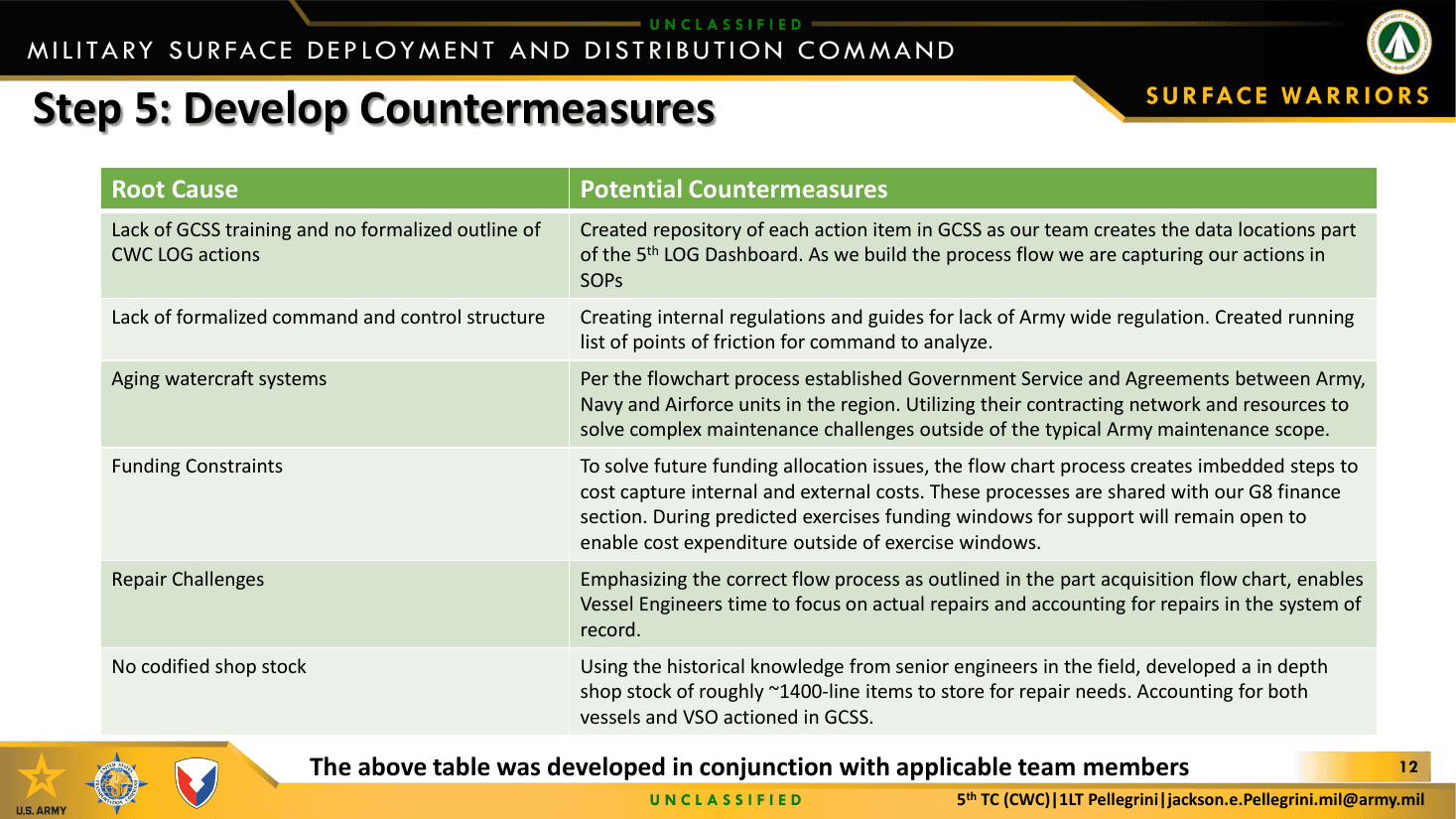
Countermeasures by root cause
GCSS action repository
Capture service plans, shop stock, maintenance actions, and internal SOPs in the 5th LOG Dashboard.
Internal regulations and guides
Document the current support process and maintain a running list of friction points for command review.
Government service agreements
Establish support paths with Army, Navy, Air Force, and regional logistics organizations.
Cost capture
Capture non-standard parts, services, fuel, and other external costs in GCSS.
Shop stock
Develop roughly 1,400 line items from recurring failures and senior engineer knowledge.
Implement Countermeasures
Detailed action plan
Completed Internal support guides and a running list of logistics friction points.
Completed Regional support agreements and contracting paths with Army, Navy, and Air Force organizations.
Completed GCSS cost capture for non-standard parts, services, fuel, and other external costs.
Completed Approximately 1,400 shop-stock line items developed and ordered.
Ongoing at closeout Service plans, GCSS repository work, internal SOPs, and VSO training.
Step 7 / Monitor Results
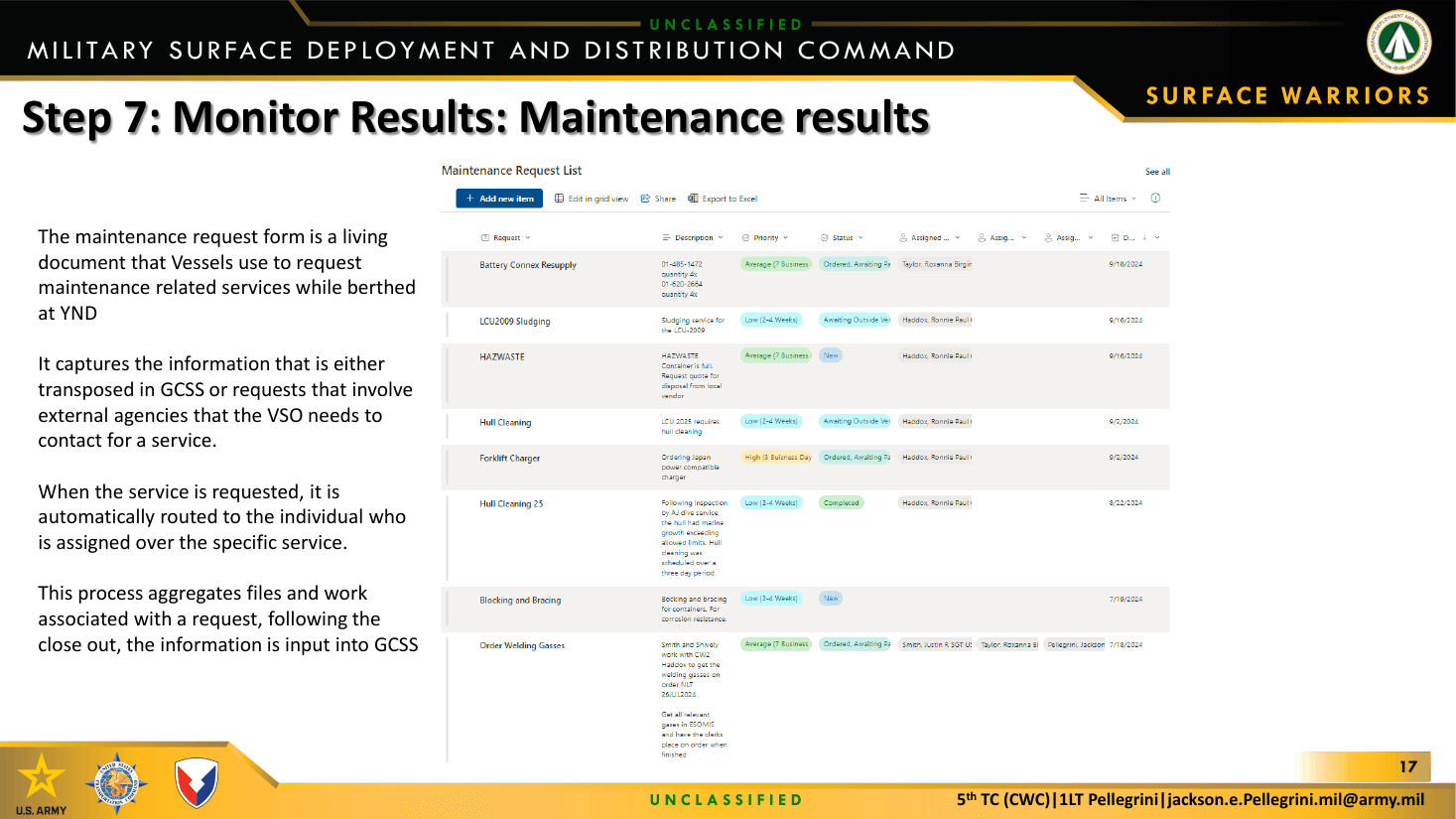
Maintenance request results
GCSS notifications captured after implementation began in October 2024.
shop-stock line items developed from recurring demand and senior engineer knowledge.
maintenance requests routed to an owner, tracked with their files, and closed into GCSS.
Step 8 / Standardize & Share Project Success
A3 Project Storyboard